
“We are all slaughtered men”
On the Timelessness of Rash Decisions
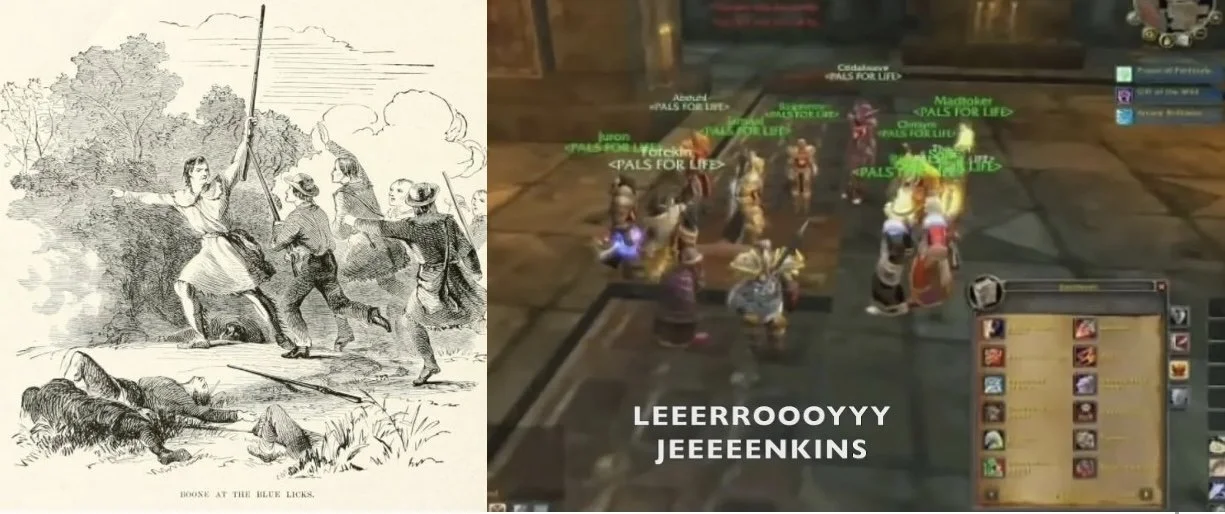
Daniel Jenkins, or Leeroy Boone?
Here is a history question you weren’t expecting: How does a 2005-era viral video game meme relate to the American War of Independence? There is only a 32.33 (repeating of course) percentage you will understand the reference, or know the answer.
Before we answer this, another question: What was the final battle of the Revolutionary War? Most likely you’re thinking the Battle of Yorktown, where General George Washington defeated General Charles Cornwallis, coinciding with the French navy’s victory over the British fleet at the mouth of Chesapeake Bay. Upon hearing the news, the British Prime Minister, Frederick North, reportedly exclaimed, “Oh God, it’s all over.”
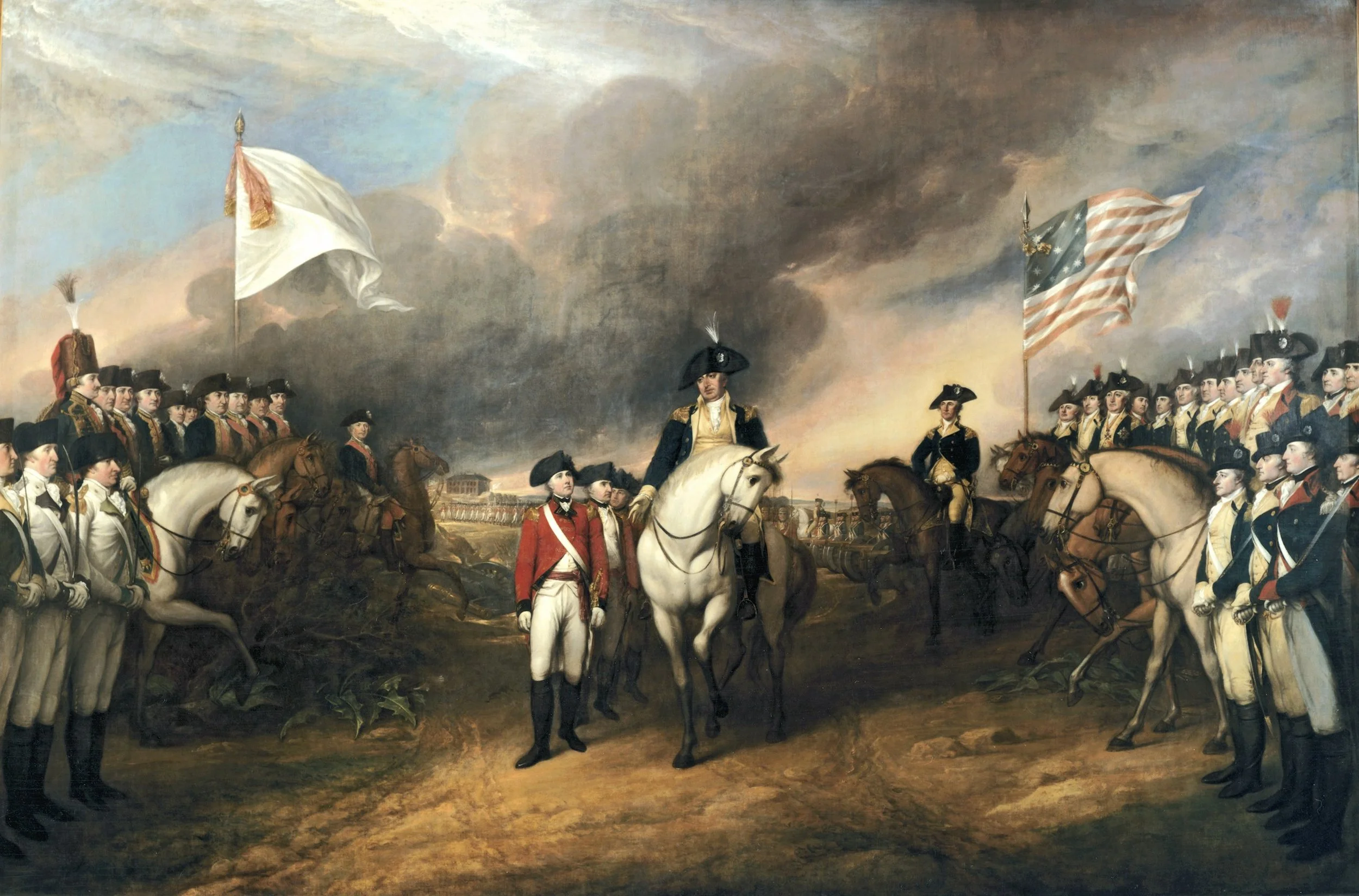
The American victory at Yorktown … NOT the final battle of the Revolutionary War
But it was not over, and Yorktown was not the final battle. For three more decades, Great Britain conspired against the fledgling United States in a failed bid to reclaim its lost colonies. British forces remained in forts out west, and there were still battles to be fought against Native American tribes seeking to reclaim their ancestral lands. Not until the War of 1812, which featured the burning of Washington, D.C. and ended with the victory at the Battle of New Orleans, did America finally secure independence once and for all.
Within this context of lingering British designs, the final battle of the Revolutionary War occurred in the western frontier on August 19, 1782—ten months after Yorktown. On this date, 180 members of the Kentucky Militia squared off against fifty British Rangers and three hundred Delaware, Huron and Shawnee tribesmen at the Battle of Blue Licks in present-day Robertson County, Kentucky.
What does the Battle of Blue Licks have to do with Leeroy Jenkins? For the uninitiated, this name refers to the viral 2005 World of Warcraft video of a team reviewing an intricate battle plan, only to have one impatient member dash into the battle (yelling “Leeeroy Jeeenkins!” as he enters). Leeroy’s brash decision forced his teammates to join the battle—and they quickly got their behinds handed to them.*
Let’s rewind 233 years. Prior to the Battle of Blue Licks, the British and indigenous forces united to lure the Kentucky militia into an ambush. The plan involved a small decoy element moving in plain sight while the larger ambush force hid in a wooded ravine.
The Kentucky Militia, led by Colonel John Todd (the granduncle of Abraham Lincoln’s future wife, Mary Todd Lincoln), also included the famed frontiersman Lieutenant Colonel Daniel Boone. Boone sensed the enemy’s movements and traces were obvious, and he feared an ambush. On the day before the battle, Colonel Todd called a council to decide whether to attack the enemy before it escaped across the Ohio River. Major Hugh McGary urged caution, and recommended waiting for reinforcements to arrive. In response, Colonel Todd ridiculed McGary as timid and ordered his men to pursue the retreating forces.
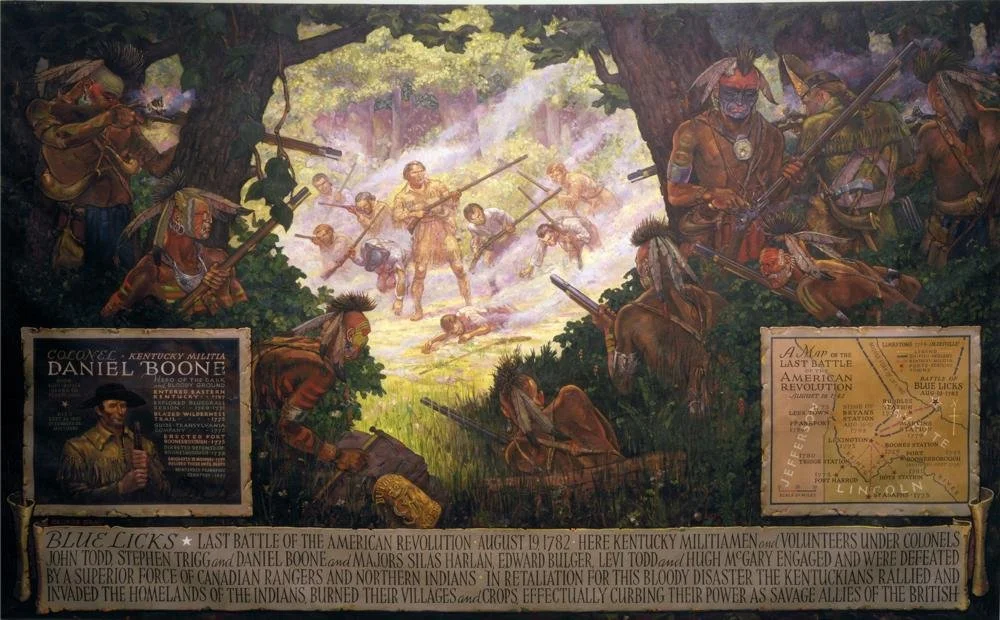
The ambush is set …
The following day, the Kentucky Militia neared the smaller British and Native American element and Colonel Todd called another council. Boone warned of a possible ambush. Major McGary, seeking to reclaim his honor, mounted his horse and galloped across the river, shouting, “Them that ain’t cowards, follow me!” Compelled to join the hasty attack, Boone said, “We are all slaughtered men.” His words would prove prophetic.
The battle ended in a crushing defeat for the Kentucky Militia, which was outnumbered and easily picked off by the British Rangers and indigenous warriors. More than seventy Kentuckians died, including Colonel Todd, Daniel Boone’s son, Israel, and Daniel’s nephew, Thomas. The Battle of Blue Licks was over in fifteen minutes, marking the worst loss for the American forces out west.
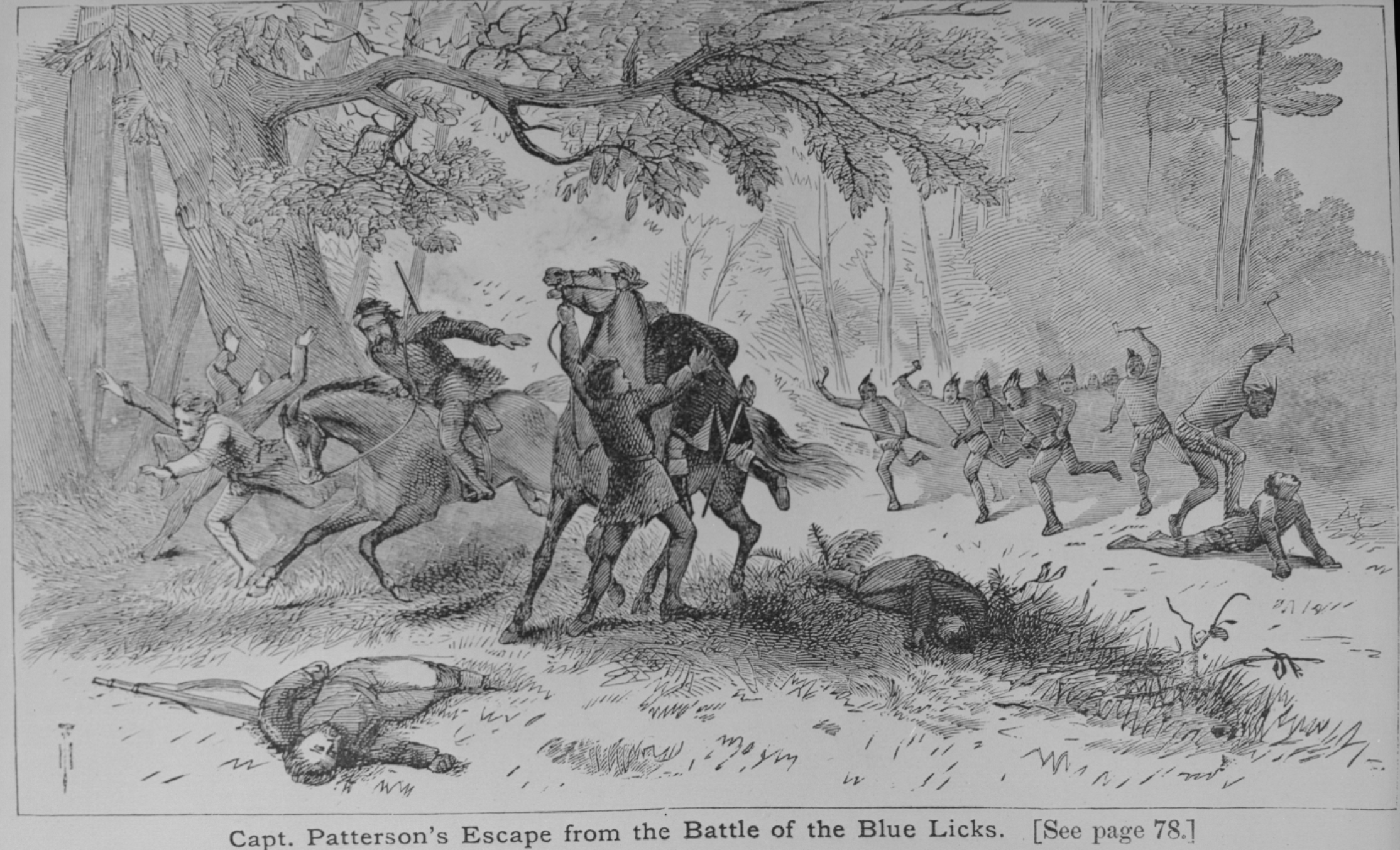
Ending in just fifteen minutes, the Battle of Blue Licks was a crushing defeat for the Kentucky Militia
However fictional, Leeroy Jenkins remains a cautionary tale. The Commonwealth of Kentucky also had a rough experience in the War of 1812, suffering 1,200 deaths—an astounding sixty-four percent of the American total. No matter the century, and no matter the opponent, rushing into battle without proper planning and intelligence is a recipe for disaster.
Learn more about William Stewart, a soldier who fell at Blue Licks, in the upcoming biography of Joseph B. Stewart: The First Pursuer: The Kentucky Giant Who Chased Lincoln’s Assassin and Personified a Turbulent Nation.
Sources and notes
* Subsequent interviews by the players indicate they staged the Leeroy Jenkins video, but that it mirrored an actual incident.
“Battle of Yorktown in the American Revolution,” American Battlefield Trust, https://www.battlefields.org/learn/revolutionary-war/battles/yorktown, accessed Nov. 30, 2025
John M. Trowbridge, “‘We are all Slaughtered Men:’ The Battle of Blue Licks.” Kentucky Ancestors, 42 (Winter 2006)
Anderson Chenault Quisenberry, Kentucky in the War of 1812 (Frankfurt, 1915)
“Leeroy Jenkins,” Wikipedia, https://en.wikipedia.org/wiki/Leeroy_Jenkins, accessed Nov. 30, 2025